Business communication · 25 August 2026 · 4 min read

Email etiquette is usually taught as a list of rules. It is far more useful to treat it as reputation management, one message at a time.
Most email training is a list of don'ts. Don't use ALL CAPS. Don't forget the subject line. Don't reply-all. The list is not wrong, but it explains nothing, so nobody remembers it past the session.
Here is the framing that does stick: every email you send is a small, permanent, forwardable statement about how you think. People who have never met you will form a view of your competence from it — and they will form that view when you are not in the room to correct it.
Why the stakes are higher than they look
A conversation is witnessed by the people present and then softens in memory. An email is a record. It gets forwarded upward with two words on top — "see below" — to someone senior who has no context about you except those paragraphs. Half the reputational damage I see people carry at work was done by messages they sent in ninety seconds and never thought about again.
So the question to ask before sending is not "is this polite?" It is: if this lands in front of my manager's manager with no explanation, what does it say about me?
Write the subject line as the conclusion
"Update" is not a subject line. "Regarding the discussion" is not a subject line. A subject line should let a busy person decide, without opening anything, what this is and whether it needs them.
- Weak: "Query" → Strong: "Need your approval by Thu: vendor invoice, ₹40,000"
- Weak: "Follow up" → Strong: "Reminder — client deck due Friday, awaiting your section"
- Weak: "Meeting" → Strong: "Moving Tuesday's review to 4pm — confirm if that breaks anything"
If you cannot write that line, you usually have not decided what you want. That is worth discovering before you write four paragraphs.
Put the ask first
The instinct, especially early in a career, is to build up: context, then background, then the history, then finally the request. It reads as thorough to the writer and as evasive to the reader, who has stopped at paragraph two.
Invert it. First line: what you need and by when. Then the context, for whoever needs it. Anyone senior will thank you; anyone who needs the detail can read on. This single change does more for how competent you sound than any amount of vocabulary.
One email, one ask
Three requests in one message reliably gets you one answer — usually to whichever was easiest. Then you chase the other two, and the chasing makes you look disorganised, when in fact the structure was at fault. Separate threads for separate decisions. It costs you thirty seconds and saves a week.
The tone problem nobody warns you about
Written English strips out everything that made your tone acceptable in speech — the warmth in your voice, the smile, the pause. What is left is often shorter and sharper than you intended. "Please send it today." is neutral when spoken and abrupt when read.
There is a second layer to this for anyone writing to colleagues abroad. A handful of phrases that are entirely standard in Indian workplace English land oddly elsewhere — "please do the needful", "revert back", "kindly", "prepone", "the same is attached". None of these are errors. But if your reader is in London or Chicago, they read as formal in a slightly dated way, and formality that draws attention to itself is a distraction from your point.
- "Please do the needful" → say exactly what you need done
- "Please revert" → "please reply" or "let me know"
- "Kindly find attached" → "I've attached"
- "The same will be shared" → "I'll send it"
The shorter version is not less respectful. It is more direct, and directness reads as confidence.
CC is a message in itself
Adding someone's manager to a thread says something whether or not you meant it. Sometimes you do mean it, and that is legitimate escalation — but do it deliberately, and say why in the email itself: "Adding Meera for visibility on the timeline." Silent escalation is read as a threat, and it is remembered long after the issue is resolved.
The same applies in reverse. If a thread has gone three rounds without resolution, it has stopped being an email problem. Pick up the phone, then send one message summarising what was agreed. That summary email is the most valuable one you will write all week.
The check before you send
- Does the subject line let someone decide without opening it?
- Is the ask in the first two lines, with a date attached?
- Would I be comfortable if this were forwarded to anyone in the company?
- Have I written anything here because I was annoyed?
- If the answer to the last one is yes — save it as a draft and read it tomorrow.
Nobody was ever promoted for the elegance of their emails. Plenty of people have been quietly passed over because of them.
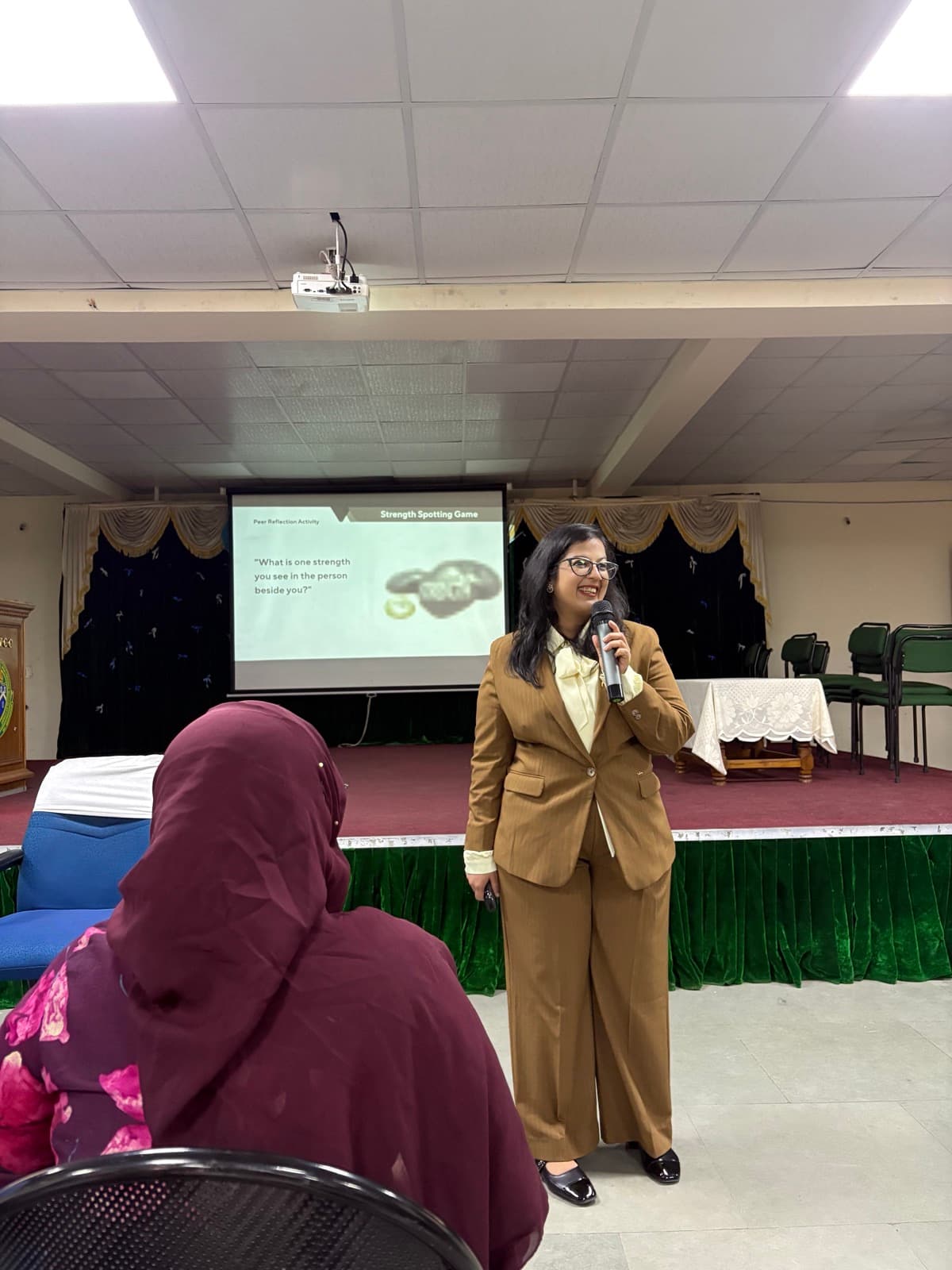
Prachee Gupta
Corporate & Campus-to-Corporate Trainer. I build confidence first, then layer the communication skills on top — for corporate teams, campus cohorts and individuals.
Book a free consultation